
Google Pixel 11 Pro Fold vs Samsung Galaxy Z Fold8 Ultra: Which Foldable Flagship Should You Buy?
In short, Samsung is the better "traditional flagship that folds" — thin, light, and camera-first. Google is the better "AI phone with a huge screen." Pick the one that fits how you actually use your phone.

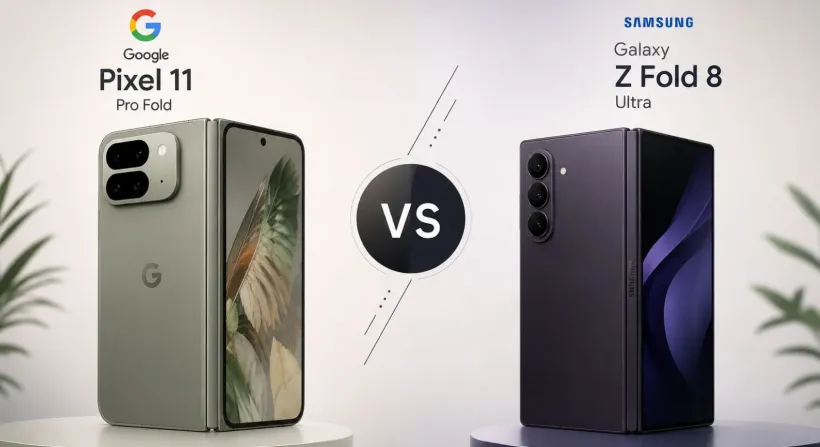
Foldable phones have finally grown up, and in 2026 two of the very best are going head to head: the Google Pixel 11 Pro Fold and the Samsung Galaxy Z Fold8 Ultra. Both are premium, big-screen foldables that cost serious money — but they chase greatness in completely different ways.
Samsung has focused on making its foldable thinner, lighter, and more like a traditional flagship, with a massive 200MP camera and faster charging. Google has poured its energy into AI, weaving Gemini and its Tensor chip into almost everything you do. So which one deserves your money? Let's break it down in simple words.
Quick Answer
- Buy the Samsung Galaxy Z Fold8 Ultra if you want the thinner and lighter design, the best camera hardware, faster wired charging, and top-tier multitasking.
- Buy the Google Pixel 11 Pro Fold if you want the smartest AI experience, brighter screens, better water resistance, and more RAM and storage for the money.
Specs at a Glance
| Feature | Google Pixel 11 Pro Fold | Samsung Galaxy Z Fold8 Ultra |
|---|---|---|
| Folded size | 155.2 x 76 x 10.1 mm | 158.4 x 72.8 x 8.9 mm |
| Unfolded size | 155.2 x 150.4 x 5 mm | 158.4 x 143.2 x 4.1 mm |
| Weight | 239 g | 215 g |
| Durability | IP68 | IP48 |
| Main display | 8" FHD+ OLED, 120Hz | 8" QXGA+ AMOLED 2X, 120Hz |
| Cover display | 6.5" FHD+ OLED, 120Hz | 6.5" FHD+ AMOLED 2X, 120Hz |
| Peak brightness | 3,600 nits | 3,000 nits |
| Chipset | Google Tensor G6 | Snapdragon 8 Elite Gen 5 for Galaxy |
| RAM / Storage | 16GB, 512GB/1TB | 12GB/16GB, 256GB/512GB/1TB |
| Rear cameras | 48MP + 10.5MP + 10.8MP | 200MP + 50MP + 10MP |
| Front cameras | 10MP + 10MP | 10MP + 10MP |
| Battery | 4,806mAh | 5,000mAh |
| Charging | 30W wired, 25W wireless | 45W wired, 20W wireless |
Design and Build
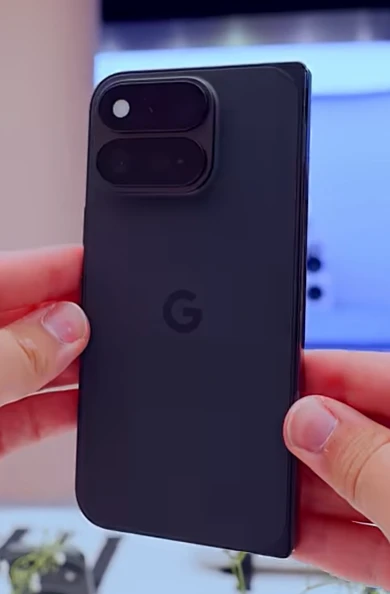
This is where the two phones feel most different in the hand. Samsung has clearly decided that an expensive foldable shouldn't feel like two phones taped together. The Galaxy Z Fold8 Ultra is just 8.9mm thick when folded, 4.1mm when open, and weighs only 215g — remarkably slim for a device that opens into an 8-inch screen. It also uses a titanium structure and an upgraded hinge to improve durability and hide the crease.
The Pixel 11 Pro Fold is slimmer than the old model, but it can't quite match Samsung. It's 10.1mm folded, 5mm unfolded, and weighs 239g — noticeably thicker and heavier. However, Google fights back with a big advantage: an IP68 rating for strong dust and water resistance, versus Samsung's weaker IP48. Google also builds in magnets for its Pixelsnap accessories.
Bottom line: If you want the thinnest, lightest foldable, Samsung wins. If you care more about water and dust protection, the Pixel takes it.
Display
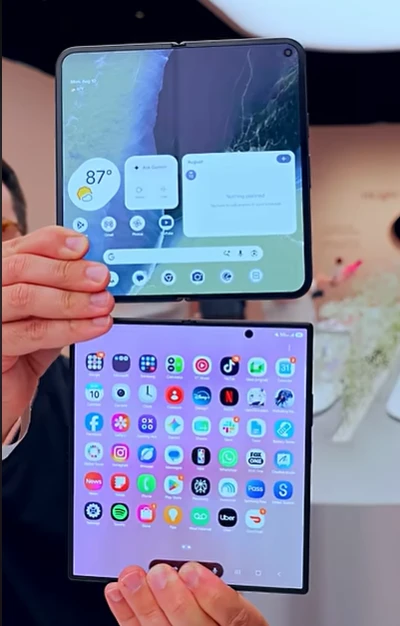
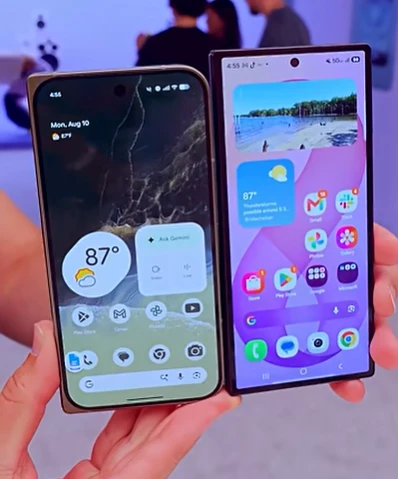
Both phones give you an 8-inch main screen and a 6.5-inch cover screen, so neither forces you to use a tiny outer display. Both also run at a smooth 120Hz.
The difference is in the details. Samsung's inner screen has a higher resolution, which makes it a little sharper for reading documents or working on the big display. Google's screens, on the other hand, get brighter — up to 3,600 nits versus Samsung's 3,000 nits — so they're easier to see in direct sunlight.
Bottom line: Samsung for sharpness, Google for brightness. Both are excellent.
Performance and Software
Here the two take very different paths. Samsung uses the powerful Snapdragon 8 Elite Gen 5 chip, the more conventional choice if you want raw flagship speed and gaming muscle. Google uses its own Tensor G6, which is built with on-device AI as its main focus rather than chasing benchmark scores. The Pixel comes with a generous 16GB RAM as standard.
On software, both promise an impressive seven years of updates, so neither wins on longevity. But the flavor is different:
- Google Pixel 11 Pro Fold runs Android with Gemini AI baked deep into the system. It can read what's on your screen to help write, reply, or translate messages, handle background tasks, and use the big inner screen as a proper workspace with floating windows and side-by-side apps.
- Samsung Galaxy Z Fold8 Ultra builds on years of foldable experience with One UI, offering some of the best multi-window multitasking around, plus its own Gemini-powered and agentic AI tools that can carry out multi-step actions across apps.
Bottom line: Samsung is stronger for raw performance and mature multitasking. Google is the pick if you want the deepest, smartest AI experience.
Battery and Charging
Samsung has a small edge here. Its 5,000mAh battery is slightly bigger than the Pixel's 4,806mAh, and it charges much faster over a cable at 45W versus the Pixel's slower 30W.
Google's comeback is wireless: it offers faster 25W magnetic Pixelsnap wireless charging (Samsung does 20W), which is great if you often charge wirelessly or use magnetic accessories.
Bottom line: Samsung for bigger battery and faster wired charging; Google for faster, more convenient wireless charging.
Cameras
Samsung has gone all-in on camera hardware. The Galaxy Z Fold8 Ultra packs a huge 200MP main camera, a 50MP ultrawide, and a 10MP telephoto with 3x zoom — plus it can shoot video in stunning 8K. On pure hardware, it's the clear leader.
Google's setup looks more modest on paper: a 48MP main camera, a 10.5MP ultrawide with macro focus, and a 10.8MP telephoto. But two things work in its favor. First, its telephoto offers 5x optical zoom (longer reach than Samsung's 3x), stretching up to 30x with AI. Second, Google's real magic is its software processing — features like Instant Night Sight and Magic Capture pull excellent results out of smaller sensors.
Bottom line: Samsung wins on camera hardware and video. Google counters with longer zoom reach and smarter AI processing.
Price in Pakistan
Both of these are ultra-premium foldables, and prices in Pakistan depend on whether you buy a non-PTA (unregistered) unit or a PTA-approved one. Here's the current picture:
| Phone | Non-PTA Price | PTA Approved Price |
|---|---|---|
| Google Pixel 11 Pro Fold | Rs. 530,000 | Rs. 690,000 |
| Samsung Galaxy Z Fold8 Ultra | Rs. 494,999 | Rs. 640,000 |
Interestingly, in Pakistan the Samsung Galaxy Z Fold8 Ultra is the cheaper of the two, both with and without PTA approval — a slightly different story from some other markets where the Pixel undercuts Samsung. Remember that a non-PTA phone will need to be registered and taxed to keep working on local networks beyond the grace period, so the PTA price reflects the true long-term cost.
(Prices can change with the dollar rate and import duties, so always confirm the latest figure before buying.)
Bottom line: In Pakistan, Samsung is the more affordable pick, while the Pixel commands a premium — so value-focused buyers may lean toward the Galaxy.
Final Verdict
Both of these are among the finest foldables money can buy in 2026 — you won't be disappointed either way. It comes down to what you value most.
Choose the Samsung Galaxy Z Fold8 Ultra if you want:
- The thinnest and lightest foldable
- The best camera hardware and 8K video
- Faster 45W wired charging and a bigger battery
- The most mature large-screen multitasking
- A Snapdragon flagship chip for raw performance
- The lower price in Pakistan (both PTA and non-PTA)
Choose the Google Pixel 11 Pro Fold if you want:
- The deepest, smartest Gemini AI experience
- 16GB RAM and 512GB storage at a lower price
- Brighter displays and a stronger IP68 rating
- Longer 5x optical zoom and Google's computational photography
- Faster magnetic wireless charging
In short, Samsung is the better "traditional flagship that folds" — thin, light, and camera-first. Google is the better "AI phone with a huge screen." Pick the one that fits how you actually use your phone.
Related News
Should You Buy the Vivo V80 Lite or the Oppo Reno 16F? Honest Review
New Mobiles Coming to Pakistan in September 2026
Top 5 Alternatives to the Vivo V80 Lite in Pakistan (2026)
iPhone 18 Series Is Changing: New Launch Date, Pro Models, Foldable iPhone & More

5 Phones Under 40k in Pakistan That Actually Feel Premium
Comments (0)
No comments yet. Be the first to comment!